Best Dog Life Jackets for Swimming and Boating
Updated 2026-09-18 · HappyPawPicks Editorial
HappyPawPicks is reader-supported. Some of our recommendations include affiliate links. If you buy through them, we may earn a commission — at no extra cost to you. As an Amazon Associate I earn from qualifying purchases. Our editorial process is independent and never influenced by commissions.
Why even good swimmers need one
Plenty of dogs paddle like pros — for a few minutes. Then they get tired, cold water saps energy, and a dog that fell off a boat may be disoriented or panicked. Breeds matter too: bulldogs, pugs, and Frenchies float poorly; dachshunds and greyhounds tire fast; puppies and seniors have less stamina. A life jacket isn’t about doubting your dog’s ability — it’s the lift handle and high-vis color that turn a bad moment into a recoverable one. The AKC’s water-safety guidance frames it like a human life vest: skill doesn’t remove the risk.
The features that earn their place
Skip the novelty vests. A real jacket has:
- Belly/buckling flotation, not just side panels — keeps the torso up, not just the sides.
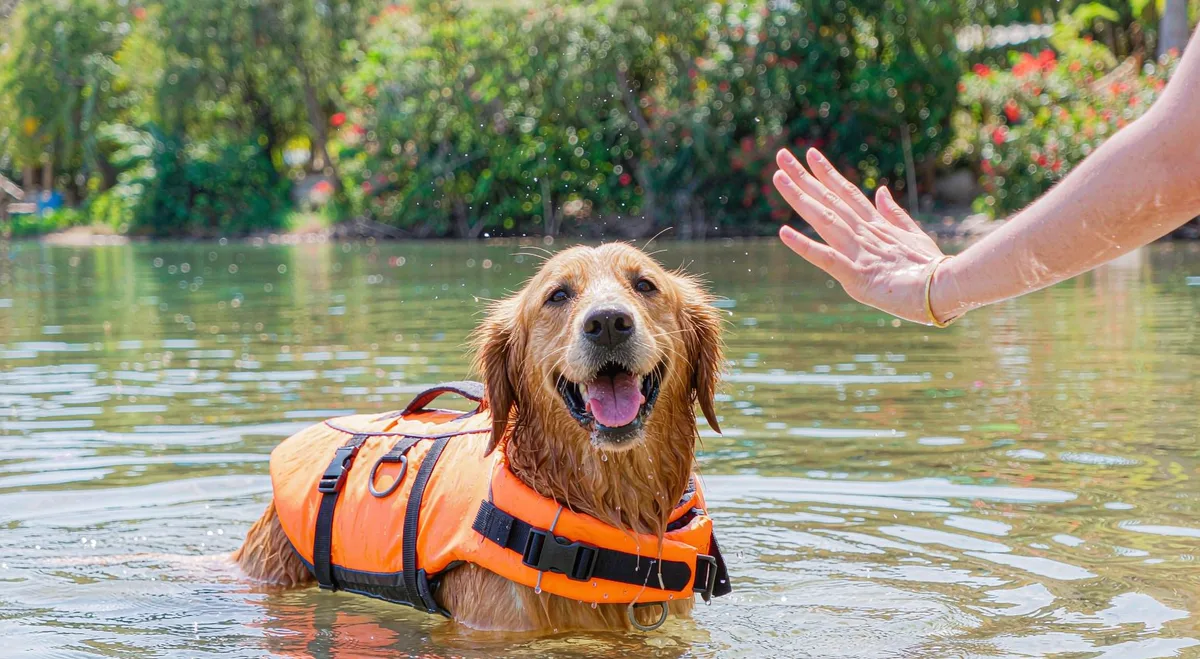
- A sturdy top grab handle to haul a 60-lb dog back into a boat. This is the single most important feature.
- A leash D-ring so you can secure them on deck without a second harness.
- Reflective trim + a bright color (orange, red, yellow) for visibility on choppy or low-light water.
- A front chin float on better models to help keep the head up.
If a product has weak flotation and no handle, it’s a costume, not safety gear.
Fit it like a harness
A loose jacket slides off or rides up over the head in the water — the worst time to discover it. Fit checklist:
- Snug enough that two fingers fit under the straps, no loose fabric flapping.
- Neck and belly straps adjusted independently.
- Lift the dog by the top handle — the jacket supports without choking or sliding toward the ears.
Too tight restricts breathing; too loose fails. When in doubt, err a touch snug and watch for chafing on the first wears.
Match buoyancy to the dog
Every jacket lists a weight range — treat it as a ceiling, not a target. A 70-lb dog near the top of a 70-lb rating has less margin than one rated to 90. Lean and short-nosed breeds need more support for their body shape, so size for flotation, not just the number on the scale. If your dog is between sizes, go up and tighten the straps.
Introduce it calmly
A dog that fights the jacket is harder to help than one that doesn’t wear it. Build a calm association:
- Put it on at home, treat generously, let them wear it around the house.
- Next session, shallow calm water — a lake edge or kiddie pool.
- Only after they’re comfortable, try a boat or deeper water.
Most dogs accept it in a few short, treated sessions. Never tether a dog to a boat by the jacket — the handle is for lifting, not mooring.
Who needs what
- Boaters: prioritize the grab handle and bright color — recovery speed is everything.
- Beach/pool swimmers: buoyant belly panel and a chin float for tired dogs.
- Puppies/seniors/flat-faced breeds: size up flotation; they tire or float poorly.
- Strong adult swimmers in calm water: still wear it — fatigue doesn’t announce itself.
Pair water safety with the rest of your gear: a no-pull harness for the dock, dog boots for hot or sharp shoreline, and a reliable leash for the walk to the water.
Keep reading
- Best no-pull dog harness — control on the dock and the trail.
- Best dog boots — protect paws on hot or rough shoreline.
- Best dog leashes — the walk to and from the water.
Frequently asked questions
Does my dog need a life jacket if it's a good swimmer?
Yes, in open water. Even strong swimmers tire, get cold, or panic if they fall off a boat, and breeds like bulldogs, pugs, and dachshunds float poorly or tire fast. A jacket adds flotation, a grab handle to lift them back aboard, and bright color so you can see them. Think of it like a human life vest — skill doesn't remove the risk.
How should a dog life jacket fit?
Snug, like a harness, so it can't slip off or ride up over the head in the water. You should fit two fingers under the straps but not have loose fabric. Adjust the neck and belly straps, then lift the dog by the top handle — the jacket should support without choking or sliding. Too loose is worse than slightly tight.
What features matter most?
A buoyant belly panel (not just side flotation), a strong top grab handle to haul them out, a leash D-ring, reflective trim for low light, and a bright color for visibility. Adjustable straps and a front float under the chin help keep the head up. Skip novelty styles with weak flotation or no handle.
Can a life jacket replace supervision?
No. It's backup, not a babysitter. Stay within reach, introduce it on land first so the dog is calm wearing it, and never tether a dog to a boat by the jacket. The handle exists so you can lift them quickly — it isn't a tether point.
How do I get my dog used to wearing one?
Put it on at home, reward heavily, and let them walk around in it before any water. Then try shallow calm water. A dog that fights the jacket is harder to help, so the goal is a calm, happy association. Most dogs accept it within a few short sessions if you go slow and treat it like a game.
References: AKC water safety for dogs guidance .