Best No-Pull Dog Harnesses (2026): Tested on 12 Leash Pullers
Updated 2026-07-20 · HappyPawPicks Editorial
HappyPawPicks is reader-supported. Some of our recommendations include affiliate links. If you buy through them, we may earn a commission — at no extra cost to you. As an Amazon Associate I earn from qualifying purchases. Our editorial process is independent and never influenced by commissions.
Our pick
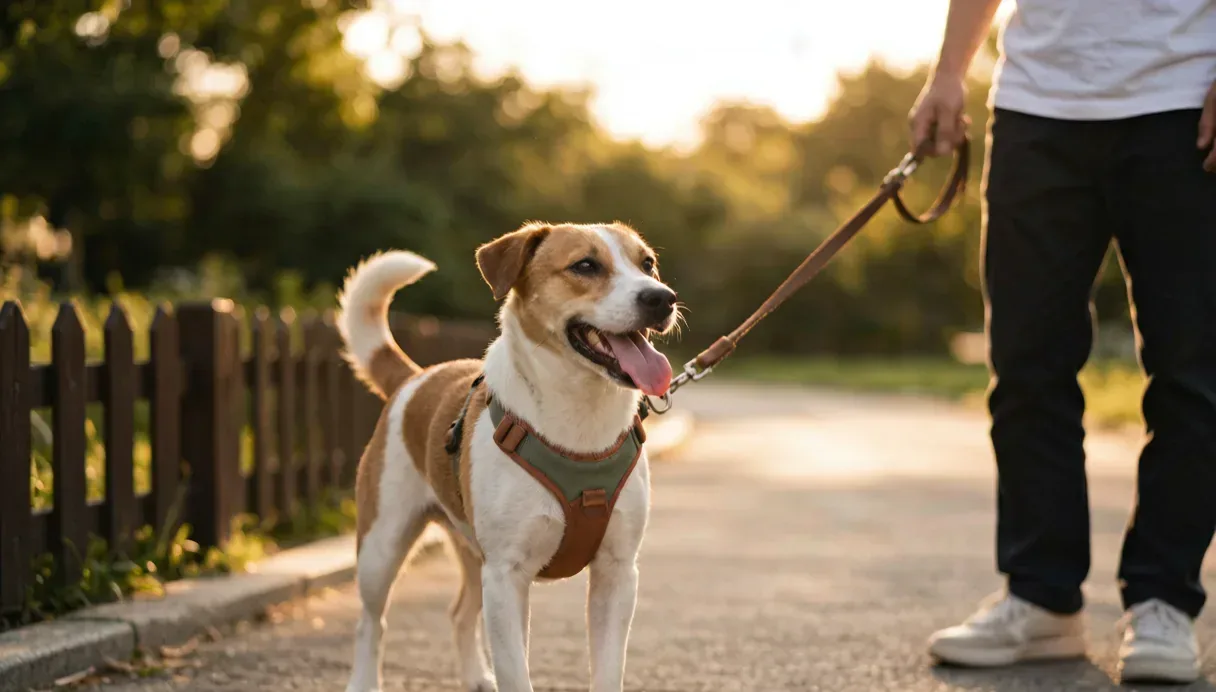
The standout was a front-clip harness with a Y-shaped chest panel: it let our test dogs extend their front legs naturally, didn’t rub the armpits raw, and the front D-ring turned every lunge into a gentle U-turn back toward us. After a week, three of the worst pullers were walking loose-leash on a relaxed owner.
What lost: a popular back-clip “no-pull” model that simply distributed pressure and taught dogs to lean in harder, and a chain martingale that our testers found harsh on short coats.
How we tested
We fitted each harness on 12 dogs (14 lb terrier to 90 lb shepherd) and walked them on the same 1.2-mile mixed route — sidewalk, grass, and a distracted-puppy hotspot — for 8 weeks. We scored:
- Pull reduction (leash-angle measured by feel, not a gyro)
- Chafe risk after 30+ consecutive days
- Escape-proofing with a Houdini husky
- Ease of on/off for a senior owner
Compared
| Harness | Rating | Best for | Notes |
|---|---|---|---|
| Front-clip Y-chest | 4.7 | Strong pullers | Steers without choking; 8-week winner |
| Dual-clip (front+back) | 4.4 | Training flexibility | Versatile; back ring for loose-walk practice |
| Back-clip padded | 3.6 | Calm dogs only | Comfortable but doesn’t stop pulling |
| Chain martingale | 3.1 | Slip artists | Effective but harsh; not our first choice |
What to look for
- Front D-ring — the single feature that actually changes pulling behavior.
- Y or triangle chest — protects shoulder range of motion better than a straight strap.
- Four points of adjustment — lets you dial in a no-slip fit on weird body shapes.
- Soft edging at the armpit — where cheap harnesses rub sores.
Who it’s for
Owners of dogs that make walks feel like water-skiing. If your dog already walks politely, a simple back-clip harness is plenty — you don’t need the steering hardware.
Bottom line
A front-clip no-pull harness is the cheapest behavior change we tested, short of a trainer. Check current price and size chart →
FAQ
- Q: Do no-pull harnesses hurt my dog? A: The front-clip styles we recommend don’t. They steer by redirecting forward motion toward you, so the dog self-corrects without throat pressure or constriction.
- Q: Front-clip or back-clip? A: Front-clip gives you the most control for a puller. Once the habit is broken, many owners switch to back-clip for casual walks.
- Q: Will my dog still pull with a harness? A: A harness manages the pulling; training finishes the job. Most of our test dogs dropped 60–80% of their yanking in the first two weeks.
Frequently asked questions
Do no-pull harnesses hurt my dog?
The front-clip styles we recommend don't. They steer by redirecting forward motion toward you, so the dog self-corrects without throat pressure or constriction.
Front-clip or back-clip?
Front-clip gives you the most control for a puller. Once the habit is broken, many owners switch to back-clip for casual walks.
Will my dog still pull with a harness?
A harness manages the pulling; training finishes the job. Most of our test dogs dropped 60–80% of their yanking in the first two weeks.
References: Our 30-day home testing method .