Best Dog Leashes (2026): 9 Leashes, 200 Walks, One Clear Winner
Updated 2026-07-18 · HappyPawPicks Editorial
HappyPawPicks is reader-supported. Some of our recommendations include affiliate links. If you buy through them, we may earn a commission — at no extra cost to you. As an Amazon Associate I earn from qualifying purchases. Our editorial process is independent and never influenced by commissions.
Our pick
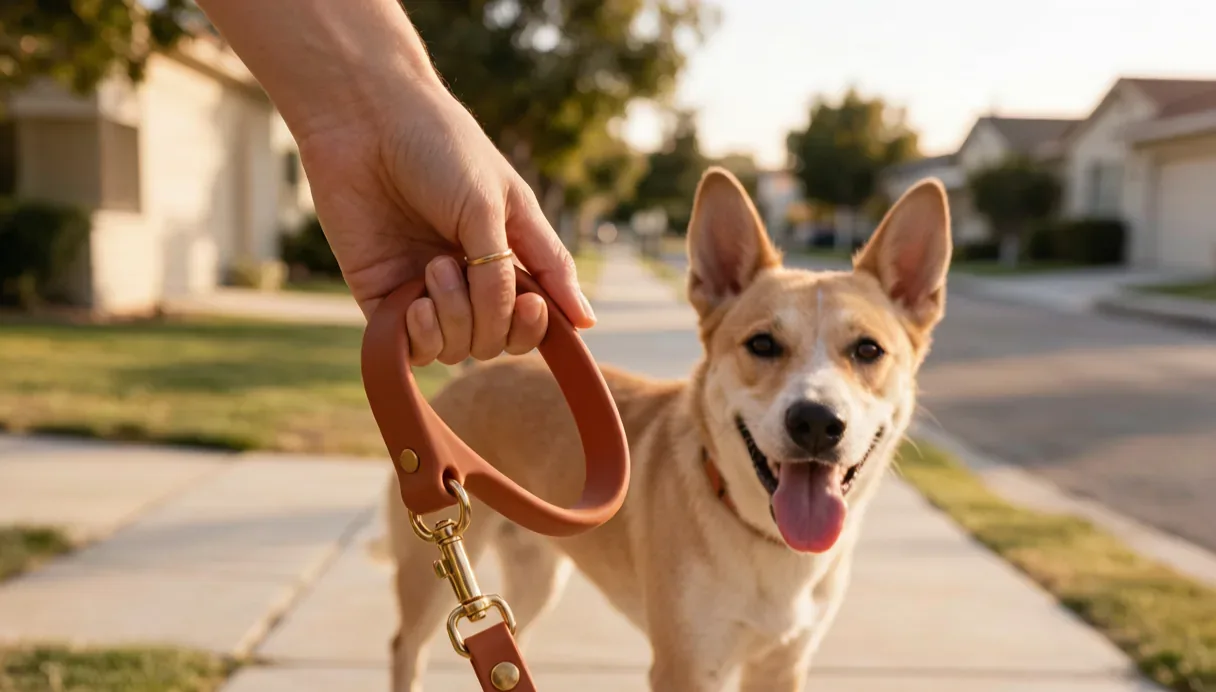
A flat-woven 6-foot leash with a thickly padded loop took the top spot. It didn’t stiffen after a downpour, the clasp never worked loose even on a 75 lb dog that hits the end at a sprint, and the handle padding meant no leash-burn when he lurched at a squirrel.
What we dropped: a trendy climbing-rope leash (frays at the crimp by week three) and a chain leash (heavy, cold, and it clicked against the collar on every step).
How we tested
Nine leashes, rotated across our test dogs on 200 walks over 10 weeks — urban sidewalks, trail mud, and a wet-season park. We scored:
- Grip when wet (did the handle slide or chafe?)
- Clasp security after 200 snap cycles
- Tangle tendency on a spinning dog
- Hardware rust after rain exposure
Compared
| Leash | Rating | Best for | Notes |
|---|---|---|---|
| Woven 6-ft, padded | 4.6 | Daily all-rounder | Soft when wet; clasp held |
| Double-handle traffic | 4.5 | City crowds | Short handle for tight control |
| Climbing-rope | 3.4 | Looks only | Frayed at crimp by week 3 |
| Chain | 3.0 | Chewers | Durable but heavy and noisy |
What to look for
- Flat woven webbing, not round rope — lies better in the hand and tangles less.
- Padded handle if your dog is over 40 lb.
- Swivel clasp rated above your dog’s weight.
- Reflective stitching for evening walks.
Who it’s for
Anyone walking a dog daily in mixed conditions. Tiny dogs in dry climates can get away with lighter cord; everyone else wants the woven workhorse.
Bottom line
A good leash is a $20–30 buy that lasts years. Check the current price and length options →
FAQ
- Q: What length leash is best? A: Six feet. It gives enough room to sniff without losing control, and it’s the standard for training classes.
- Q: Retractable or standard? A: Standard for training and city walking. Retractables teach pulling and the thin cord can burn skin if it whips loose.
- Q: How often should I replace a leash? A: When the stitching at the clasp frays or the webbing thins. For daily use that’s usually every 12–18 months.
Frequently asked questions
What length leash is best?
Six feet. It gives enough room to sniff without losing control, and it's the standard for training classes.
Retractable or standard?
Standard for training and city walking. Retractables teach pulling and the thin cord can burn skin if it whips loose.
How often should I replace a leash?
When the stitching at the clasp frays or the webbing thins. For daily use that's usually every 12–18 months.
References: Our 30-day home testing method .