Best Pet Food Storage Containers: Keep Kibble Fresh and Pest-Free
Updated 2026-09-18 · HappyPawPicks Editorial
HappyPawPicks is reader-supported. Some of our recommendations include affiliate links. If you buy through them, we may earn a commission — at no extra cost to you. As an Amazon Associate I earn from qualifying purchases. Our editorial process is independent and never influenced by commissions.
Why the bag isn’t enough
That roll-top kibble bag is a marketing wrapper, not a storage solution. Once opened, it slowly lets in air and humidity; the fats in the food oxidize and go rancid, and in warm or damp homes it becomes an open invitation to ants and pantry moths. Pet food brands generally recommend transferring opened food to a sealed container — the FDA’s pet food guidance likewise stresses checking dates and storing food so it stays safe. A proper bin is the cheap insurance against wasted food and a bug problem.
What “airtight” actually means
Not every lid that clicks is airtight. Look for:
- A silicone or rubber gasket in the lid rim — that’s the seal that blocks air and moisture.
- A latch or locking tabs that pull the lid down onto the gasket (loose snap lids leak).
- A pour spout or wide mouth so you can serve without leaving it open.
If a container has none of those, it’s a tub, not storage. The gasket is the feature you’re paying for.
Material: plastic vs stainless
- BPA-free hard plastic: the standard, light, cheap, and fine for most homes. Pick thick walls over thin flexible ones — thin plastic cracks and the seal fails.
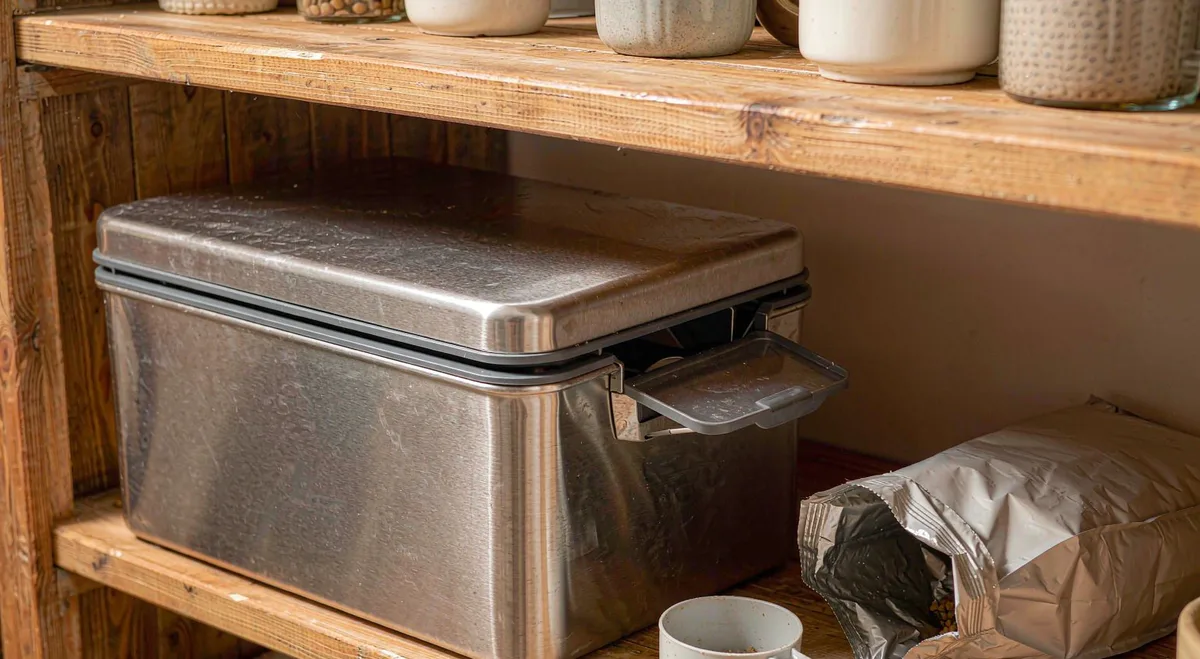
- Stainless steel: resists odors and scratches, often dishwasher-safe, and outlasts plastic. Better if you store pungent food or want something that won’t stain. Pricier, but it’s a buy-once item.
- Avoid: flimsy clear bins with friction lids, and anything unmarked for food contact.
Keep the bag, or not
Best practice: drop the whole original bag into the sealed bin. The bag carries the batch code, expiry, and often a freshness liner, and it adds a second barrier. If you prefer loose kibble, label the bin with the expiry date and rotate oldest-first. Either way, the lid stays closed between meals — every open minute is a freshness leak.
Size to your buying habit
Match the bin to the bag you normally buy:
- 12–15 lb bag → medium bin.
- 25–30 lb bag → large bin.
- 40 lb+ → extra-large, or split between two.
An oversized bin leaves dead air that holds moisture and makes rotation confusing. A bin you empty and refill on your normal cycle stays freshest.
Features worth paying for
- Pour spout / scoop slot: serve without lifting a heavy lid.
- Stackable shape: saves floor space in a small laundry or pantry.
- Wheeled base: a full 30-lb bin is heavy — wheels save your back.
- Translucent window: see the level without opening the seal.
Skip “decorative” bins with weak seals — pretty doesn’t keep food safe.
Who it’s for
Every kibble-feeding household benefits, but it matters most if you: buy in bulk (more at stake if it spoils), live somewhere warm or humid (faster rancidity), or have had ants or moths before (prevention beats extermination). Pair it with a measured scoop so portions stay consistent — see our best cat food and best dog food guides for feeding amounts.
Keep reading
- Best cat food — pair fresh storage with the right formula.
- Best dog food — same freshness rules, bigger bags.
- How much to feed a puppy — portion control starts with measured scoops.
Frequently asked questions
Do I need a special pet food container?
You need an airtight one, not necessarily a 'pet' branded one. Kibble stored in its original bag, half-open, stale within weeks and invites pests. A sealed container with a gasket keeps fat from going rancid and blocks ants and weevils. A generic food-grade storage bin with a real seal works as well as a pet-labeled one — you're paying for the seal, not the logo.
Plastic or stainless steel?
BPA-free hard plastic is the budget standard and fine for most homes. Stainless resists odors and scratches and lasts longer, good if you store strong-smelling food or want something dishwasher-safe. Avoid thin, flimsy plastic that cracks — once the seal fails, freshness goes with it.
Should I keep the food in the original bag inside the container?
Yes, when you can. The bag has the batch code, expiry, and sometimes a freshness liner; dropping it inside a sealed container keeps all that and adds a second barrier. If you pour kibble loose into the bin, write the expiry date on tape and use the oldest first. Either way, keep the lid sealed between feeds.
How long does stored kibble stay fresh?
Sealed in an airtight container, most kibble stays good for the shelf life on the bag — often many weeks to a few months after opening, depending on the formula and climate. Heat and humidity shorten that. In a humid home, a container with a tight gasket and a cool, dark spot matters more than the brand. Smell the food before each refill; rancid or moldy kibble should be tossed.
How big a container do I need?
Match it to the bag size you buy, not the biggest bin. A 30–40 lb bag needs a large bin; a 12–15 lb bag fits a medium one. Over-sized containers leave air space that holds moisture, and half-empty bins confuse rotation. Pick a size you'll empty and refill on a normal purchase cycle.
References: FDA pet food storage and handling guidance .