How to Reduce Pet Moving Stress: A Room-by-Room Plan That Works (2026)
Updated 2026-08-06 · HappyPawPicks Editorial
HappyPawPicks is reader-supported. Some of our recommendations include affiliate links. If you buy through them, we may earn a commission — at no extra cost to you. As an Amazon Associate I earn from qualifying purchases. Our editorial process is independent and never influenced by commissions.
Why moving is uniquely hard on pets
A move scrambles the two things pets rely on: smell and routine. Cats in particular map their world by scent and territory, so a house that smells of cardboard and missing furniture reads as unsafe. Dogs feel the household’s tension — the ASPCA notes pets pick up on and mirror your stress, so a frazzled owner makes a frazzled dog.
The good news: you don’t need to eliminate the disruption, just shape it. A pet that has one familiar-smelling room and an unchanged dinner time is markedly more resilient than one dropped into a fully unpacked chaos.
Before the move: start two weeks out
- Crate-train or carrier-train early. If your pet isn’t used to a crate, start at least two weeks before. Leave it open with a comfy bed and hide treats or meals inside so it becomes a safe, familiar-smelling spot — not a trap that appears on moving day. Fear Free and the ASPCA both recommend this.
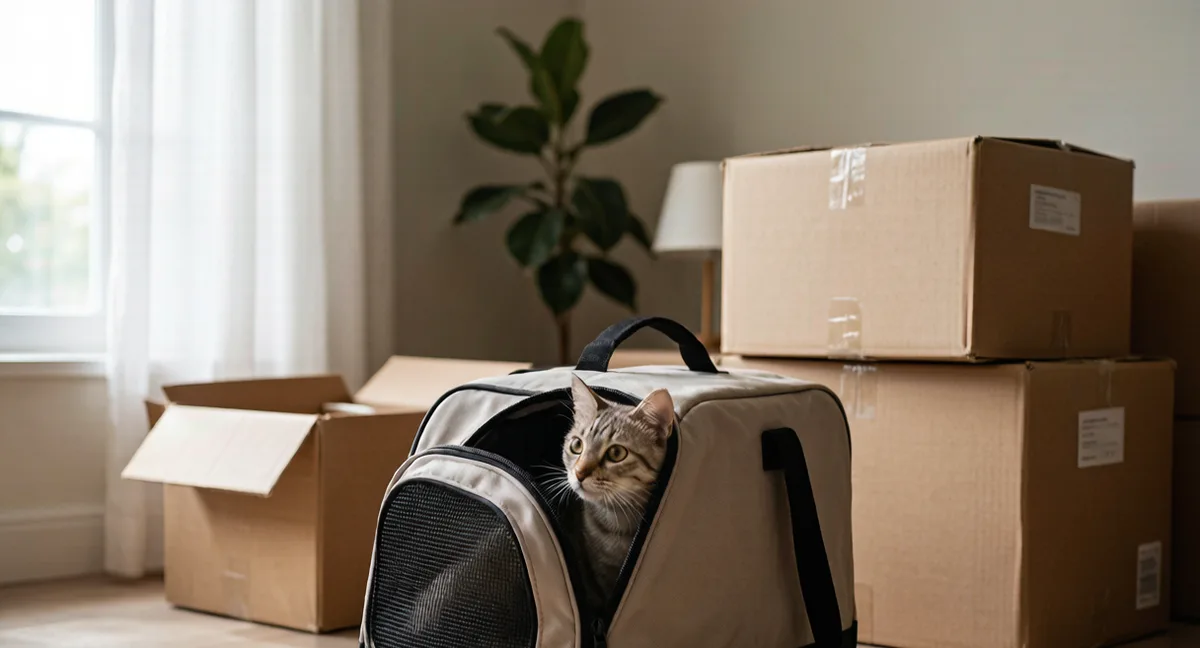
- Bring boxes in early, pack the pet’s room last. Cats get uneasy when familiar objects disappear; keeping their room intact until the end gives them stability. Put a sign on the door: “PETS INSIDE, KEEP CLOSED.”
- Gather records and update ID. Pull copies of vaccination and medical records, and make sure the microchip registry and ID tags carry your current contact details — you’ll want them correct the moment you arrive.
- Book the vet if you’re considering calming aids. Pheromone diffusers and supplements like alpha-casozepine (Zylkene) can be started pre-move; sedation is a vet conversation, not a DIY decision.
On moving day: confine, don’t free-range
The single biggest risk on moving day is an escape. Doors are open, the truck is loud, and a scared pet will bolt.
- Keep them in the safe room with the door shut, or at a friend’s house / daycare, until the truck is loaded. The ASPCA specifically recommends this to prevent a dash for freedom during loading.
- Your calm matters. Try not to broadcast panic — pets read it. A low-key departure from the old place sets the tone.
- Secure transport. In the car, use a well-ventilated carrier or a seat-belt harness; on stops, keep them leashed. Never let them out in an unfamiliar area.
At the new home: home base first
Resist the urge to fling the door open and let them “explore.” An unfamiliar space all at once is overwhelming.
- Set up home base before they enter — bed, food and water bowls, litter box (for cats), favorite toys, and a worn unwashed t-shirt. This room is their anchor.
- Let them settle there for a day or more before opening other doors.
- Expand slowly. Open one room at a time, using a pet gate so you control the frontier. Cats especially want to map every hiding spot before they relax.
- Move the litter box gradually if you need to relocate it — an inch or two a day — rather than teleporting it.
Fear Free notes it commonly takes two or more weeks for a cat to accept a new routine and home, and some take longer. Dogs may settle in days but can also take weeks or months, so patience isn’t optional.
Keep the routine stupidly consistent
Feed at the same times. Walk at the same times. Same play sessions. Routine is the cheapest anxiety medicine there is, and during a move it’s the one thing you can fully control. Don’t buy new beds or trees until they’ve settled — familiar smells are calming, new ones are not.
Pet-proof the new place
Before free roam, check the new home like a toddler is moving in: tuck electrical cords, secure window screens, remove poisonous houseplants, and confirm no pest-control poison traps were left behind. Check the fenced yard for toxic plants and gaps a dog could dig under or leap.
When to call the vet
Most pets settle with time and routine. Reach out if:
- A cat hasn’t eaten or used the litter box for more than 24–48 hours after arrival.
- Stress behaviors (hiding, not eating, destructive panic) persist well past the expected adjustment window.
- You’re considering sedation for travel — that’s a vet call, not a pharmacy run.
Bottom line
You can’t stop a move from being disruptive, but you can contain it. One familiar-smelling room, an unchanged schedule, and a slow territorial expansion turn a terrifying event into a manageable one. Confine on moving day, anchor them at the new place, and let cats take their two weeks. Most pets come out the other side fine — they just need you to keep their world small and predictable while the boxes pile up.
FAQ
- Q: How long does it take a cat to adjust to a new home? A: Commonly two or more weeks for a cat to accept a new routine and home, and some take longer — Fear Free notes patience is required because the timeline varies widely by individual. Dogs may adjust in days but can also take weeks.
- Q: Should I sedate my cat or dog for a move? A: Don’t self-prescribe sedation. Talk to your vet; for many pets, pheromone diffusers or a milk-derived calming supplement started before the move are safer first steps, and sedation is reserved for specific cases.
- Q: How do I keep my dog calm on moving day? A: Keep them confined to a quiet room or at daycare while the truck loads, maintain their normal schedule, and stay calm yourself — pets mirror your stress. Secure them in a carrier or harness for the trip.
- Q: Should I update my pet’s microchip when I move? A: Yes. Update the microchip registry and ID tags with your new address and phone before or right after arrival, so a lost pet in the new neighborhood can be returned.
- Q: Do dogs get stressed when moving? A: Yes. Dogs feel the disruption and often mirror their owner’s tension. They may show it differently than cats — clinginess, loss of appetite, or restlessness — but the stress is real, and routine plus confinement helps.
Keep reading
- Dog Separation Anxiety at Home: The Protocol That Actually Works
- Best Calming Treats for Dogs
- Pet First-Aid Kit Checklist
Frequently asked questions
How long does it take a cat to adjust to a new home?
Commonly two or more weeks for a cat to accept a new routine and home, and some take longer — Fear Free notes patience is required because the timeline varies widely by individual. Dogs may adjust in days but can also take weeks.
Should I sedate my cat or dog for a move?
Don't self-prescribe sedation. Talk to your vet; for many pets, pheromone diffusers or a milk-derived calming supplement started before the move are safer first steps, and sedation is reserved for specific cases.
How do I keep my dog calm on moving day?
Keep them confined to a quiet room or at daycare while the truck loads, maintain their normal schedule, and stay calm yourself — pets mirror your stress. Secure them in a carrier or harness for the trip.
Should I update my pet's microchip when I move?
Yes. Update the microchip registry and ID tags with your new address and phone before or right after arrival, so a lost pet in the new neighborhood can be returned.
Do dogs get stressed when moving?
Yes. Dogs feel the disruption and often mirror their owner's tension. They may show it differently than cats — clinginess, loss of appetite, or restlessness — but the stress is real, and routine plus confinement helps.
References: ASPCA: Moving With Your Pet, Fear Free: Moving with Pets .