Best Cooling Mats for Dogs in 2026: Beat the Heat Without the Hype
Updated 2026-08-12 · HappyPawPicks Editorial
HappyPawPicks is reader-supported. Some of our recommendations include affiliate links. If you buy through them, we may earn a commission — at no extra cost to you. As an Amazon Associate I earn from qualifying purchases. Our editorial process is independent and never influenced by commissions.
The mistake most people make
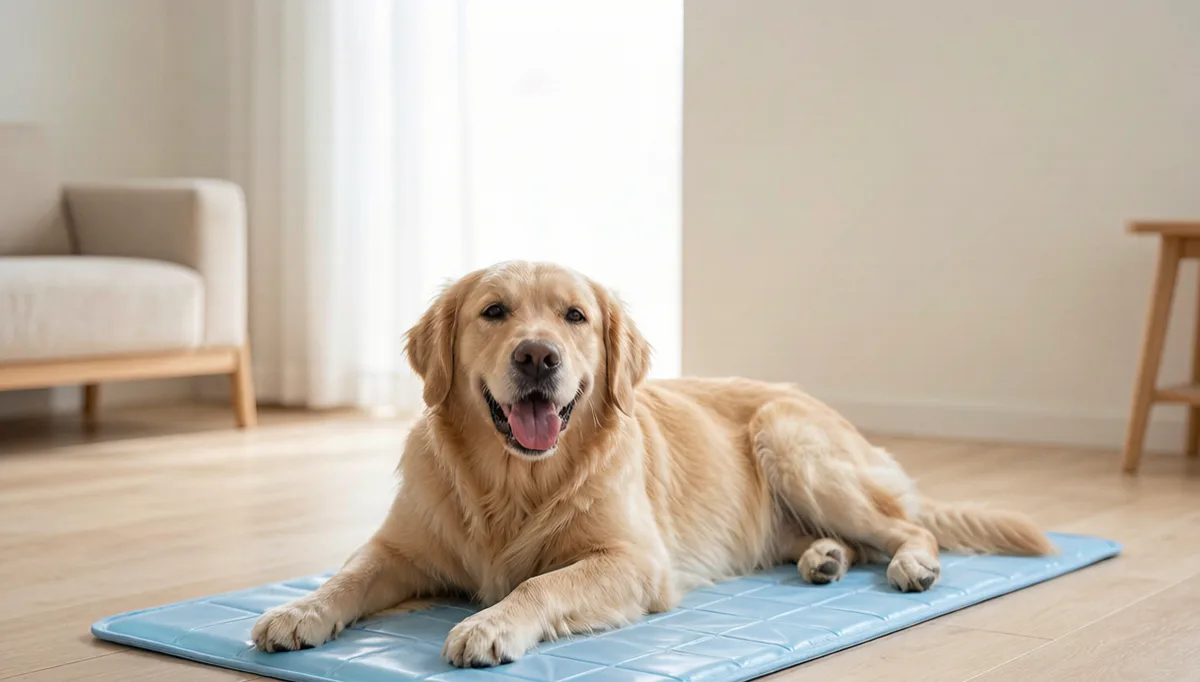
They buy a “cooling” product expecting a cold room. A mat doesn’t cool the air — it cools the contact point where your dog lies, through conduction. That’s genuinely useful (a dog spreads out on a cool tile for a reason), but it won’t save a dog left in a hot car. Treat the mat as one layer of heat management, never the only one.
What the materials actually do
- Gel / pressure-activated mats. Activated by the dog’s weight and body heat, no electricity, no freezer. They feel cool for roughly 1–4 hours of use, then recharge on their own when empty. Best for crates, cars, and power-outage days.
- Water-filled mats. Can be chilled for extra cold but are heavier, can leak, and need fridge/freezer space. Less portable.
- Raised cots with breathable mesh. No “cooling tech” at all — they just let air move underneath. Often the best choice for chewers and for overnight sleep, because there’s nothing to puncture.
The quiet truth: for most dogs, a good raised cot does 80% of what a gel mat does, and a gel mat does the other 20% when you need something thin and portable.
Who actually needs one
- Crate dogs in summer. A thin mat on the crate floor gives relief without bulk.
- Car trips. Passive mats need no outlet, so they work in the back seat where a fan doesn’t reach.
- Senior or thick-coated dogs who overheat faster and lie down more.
- Power-outage days. When the AC is off, a passive mat is one of the few things still working.
If none of those describe your dog, a raised cot probably covers you.
What to look for
- A cover your dog will lie on. Smooth vinyl beats fuzzy fabric for heat transfer, but some dogs refuse slick surfaces. Match the texture to your dog.
- A non-slip bottom. A mat that slides across the floor won’t get used.
- A wipe-clean surface. Summer = drool and dirt; machine-washable or wipeable saves you.
- Size for the whole body. A mat your dog’s hips hang off of isn’t doing the job.
What doesn’t matter
- “Freezable” as a selling point. Only some mats want the freezer, and freezing isn’t required for the passive ones to work.
- Fancy prints. The function is in the core, not the pattern.
- A high price. Passive gel mats are a mature, cheap technology; a $15–35 mat does the same physics as a $70 one.
Safety notes
A mat is prevention, not treatment. If your dog is already panting hard, drooling, weak, or staggering, that’s heatstroke — get them to shade, cool water, and a vet, don’t reach for the mat. The VCA heat-stroke overview is worth reading before summer, not during an emergency. And keep any gel mat away from a dog that shreds bedding.
Bottom line
Buy a passive gel cooling mat as your first line — cheap, portable, no power. Add a raised breathable cot if your dog chews or sleeps hot at night. Neither replaces shade, water, and airflow, but together they take the edge off a hot day for almost any dog.
FAQ
- Q: Do dog cooling mats actually work? A: Yes, passively. They pull heat off the contact point through conduction, so the spot your dog lies on stays cooler than the air. They don’t cool the room and aren’t a substitute for shade, water, and airflow on a hot day.
- Q: How long does a cooling mat stay cool? A: Pressure-activated gel mats stay cool about 1–4 hours of use, then recharge on their own when empty. No electricity needed, which is why they suit crates and cars.
- Q: Are cooling mats safe for puppies and chewers? A: The cover is usually non-toxic if intact, but a shredder can puncture the gel core. For dedicated chewers, use a raised breathable cot instead — nothing to rupture.
- Q: Do I need to freeze a dog cooling mat? A: Only water-filled types. Gel/pressure-activated mats activate from your dog’s weight and body heat and never go in the freezer; freezing one not built for it can crack the core.
- Q: What’s better, a cooling mat or a cooling bed? A: A mat is portable for crates and cars; a cooling cot or bed is better for overnight sleep and for chewers. Many households end up with both.
Keep reading
- Best Dog Boots: Protection That Actually Fits
- Best Elevated Dog Bowls: Are They Worth It?
- Best Calming Treats for Dogs: What Helps and What’s Hype
Frequently asked questions
Do dog cooling mats actually work?
Yes, the passive ones do — but understand what 'work' means. A gel or pressure-activated mat doesn't make a room cold; it pulls heat off the dog's body through conduction, so the spot your dog lies on stays cooler than the air. That can be the difference between a dog panting for an hour and settling in minutes. They don't replace shade, water, and airflow on a genuinely hot day.
How long does a cooling mat stay cool?
Pressure-activated gel mats typically feel cool for 1–4 hours of continuous use before they warm to room temperature, then recharge on their own over 15–20 minutes of non-use. They need no electricity, which is why they're popular for crates and car trips. Electric or water-circulating mats last longer but need a power source and aren't safe to leave unattended.
Are cooling mats safe for puppies and chewers?
Most are non-toxic if the outer cover is intact, but a dog that shreds bedding can puncture the gel core. If your dog is a dedicated chewer, skip the gel mat and use a raised cot with a breathable mesh instead — air flows underneath and there's nothing to rupture. Always supervise a chewer with any new bed.
What's the difference between a cooling mat and a cooling bed?
A mat is a thin, portable pad you can drop in a crate, car, or tile floor. A cooling bed is a fuller structure (often a raised cot with a cooling cover) built for overnight sleep. If you need something for the crate during a road trip, a mat wins; if your dog overheats at night in the bedroom, a cooling cot is the better long-term fix.
Do I need to freeze a dog cooling mat?
Only some. Gel/pressure-activated mats are activated by the dog's weight and body heat and never go in the freezer. A smaller subset is water-filled and can be chilled in the fridge or freezer for extra cold — but those are heavier, can leak, and aren't the norm. Check the product's instructions; freezing a mat not designed for it can crack the core.
References: AKC: Heatstroke in Dogs (signs, prevention, what to do), VCA Animal Hospitals: Heat Stroke in Dogs .