Best Cat Nail Clippers (2026): Stress-Free At-Home Trims
Updated 2026-10-13 · HappyPawPicks Editorial
HappyPawPicks is reader-supported. Some of our recommendations include affiliate links. If you buy through them, we may earn a commission — at no extra cost to you. As an Amazon Associate I earn from qualifying purchases. Our editorial process is independent and never influenced by commissions.
Start here: you’re buying control, not a gadget
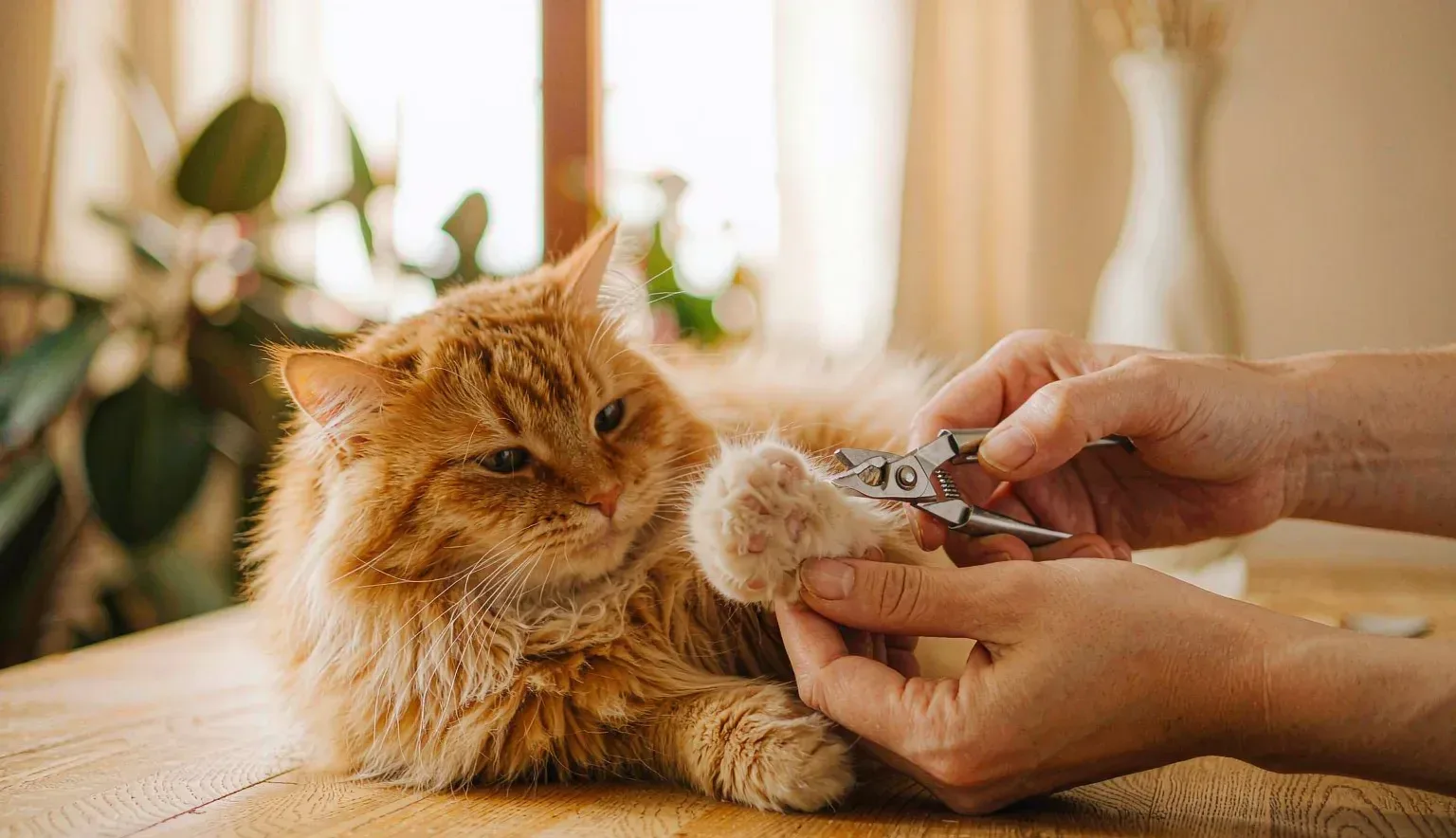
Cat nail trimming goes wrong in one specific moment — the cut that goes too deep and hits the quick, the living blood vessel running through the center of the nail. One bad snip means pain, a little blood on the carpet, and a cat who will vanish the next time you pick up the clippers. That fear is why nail trimming is the grooming task most cat owners dread, and it’s also why the tool matters less for its feature list than for how much control it gives you: over cut depth, over speed, and over your own shaking hands.
Here’s the reassuring part. The right tool for almost every household costs between $7 and $60, and the differences between options come down to a handful of design decisions you can actually evaluate before buying. Below is how the real styles and models compare, and which one fits which cat.
How we picked
We compared the three tool families that dominate the category — scissor-style clippers, guillotine clippers, and electric grinders — across the specific models that consistently show up in professional groomer kits and best-seller lists: Safari, Epica, Resco, Millers Forge, Pet Republique, Zen, and Dremel. We judged each on the factors that change the outcome of a real trim, not the ones that look good on a box:
- Blade material and sharpness — forged stainless outlasts stamped steel, and dull blades crush instead of cut.
- Safety features — a safety stop or guard that physically limits how deep the blade can close.
- Cut style — how the tool behaves on a squirming cat, not just a cooperative one.
- Grip and noise — the two things that determine whether your cat escalates mid-session.
- True cost of ownership — replacement blades and sanding bands are consumables, not one-time purchases.
Compared
| Tool | Style | Typical price | Rating | Best for |
|---|---|---|---|---|
| Safari Professional Nail Trimmer | Scissor | $10–19 | 4.5 | Most cats; safety stop + lifetime warranty |
| Epica Professional Clippers | Scissor + guard | $8–11 | 4.3 | Budget buyers who still want a guard |
| Dremel 7300-PT | Electric grinder | $30–60 | 4.2 | Clipper-averse cats; zero quick-cut risk |
| Resco Deluxe Clippers | Scissor | ~$15 | 4.2 | Long-term durability; replaceable blades |
| Millers Forge Cat Clipper | Scissor (forged) | Under $10 | 4.1 | Thick nails, no-frills buyers |
| Pet Republique Clippers | Guillotine | ~$7 | 4.0 | Low hand strength; arthritis-friendly |
The picks, explained
Best overall — Safari Professional Stainless Steel Nail Trimmer (~$10–19). This is the default recommendation for a reason: it’s the scissor-style clipper that professional groomers and shelters reach for most, made by Coastal (the Safari brand) with a lifetime warranty. The blades are sharp stainless steel that cut cleanly instead of crushing, and the built-in safety stop limits how far the blade closes — not a guarantee against a quick strike, but a real backstop while you’re still learning where the quick sits. The rubberized grip keeps control when a paw jerks. Rating: 4.5/5. The deduction: blades gradually dull after a year or more of multi-cat weekly use, and there’s no built-in file to smooth the edge after cutting.
Best budget — Epica Professional Cat & Dog Nail Clippers (~$8–11). The cheapest tool we’d still call safe. You get sharp stainless blades and a safety guard for pocket change, which is exactly what a first-time owner needs. The guard is less refined than Safari’s and the blades won’t last as long, but at this price, replacing the tool is cheaper than sharpening a premium one. Rating: 4.3/5.
Best for cats that hate clippers — Dremel 7300-PT (~$30–60). A cordless, two-speed grinder that uses a sanding band to file the nail down a little at a time. Because it abrades rather than slices, it cannot cut into the quick — the failure mode that ruins a cat’s trust simply doesn’t exist. It also leaves a smooth edge that doesn’t catch on furniture. The catch is acclimation: the motor’s noise and vibration need short, treat-heavy introduction sessions, a full trim takes longer than clipping, and sanding bands are a recurring cost. Rating: 4.2/5 — the highest ceiling of any tool here, but only for cats (and owners) patient enough to get there.
Best long-term durability — Resco Deluxe Cat Nail Clippers (~$15). Resco builds professional-grade tools with replaceable blades, so instead of buying a new clipper every year or two, you swap in a fresh blade. If you groom multiple cats or expect to trim claws for a decade, the math quietly favors this one. Rating: 4.2/5 — excellent build, slightly less forgiving for beginners than the guarded options.
Best low-effort grip — Pet Republique Professional Clippers (~$7, guillotine). Guillotine-style tools slide a single blade rather than requiring a squeeze, which is genuinely easier on arthritic or weak hands. The trade-off is a fixed blade opening that limits how thick a nail fits, so they’re best on typical cat claws rather than oversized senior nails. Rating: 4.0/5.
The four things that actually matter
Blade material. Forged stainless — the kind Millers Forge has used for over a century and Resco uses today — holds an edge far longer than stamped steel. A dull blade doesn’t cut; it crushes and splits the nail, which hurts and makes future sessions harder. If you buy cheap, plan on replacing the tool, not sharpening it.
Cut style. Scissor-style is the fastest and most familiar — best for cooperative cats and anyone who’s trimmed nails before. Guillotine needs the least hand strength but limits nail size. Grinders eliminate quick-cut risk entirely at the cost of time and noise. Match the style to the cat in front of you, not to the one you wish you had.
Safety features. A safety stop or guard limits cut depth, which is the single most useful feature for beginners — most quick strikes happen in the first few trims, while you’re still learning to read the nail. Experienced groomers can skip it; new owners shouldn’t.
True cost of ownership. The sticker price misleads in both directions. A $60 grinder needs sanding bands replaced periodically, while a $13 clipper with a lifetime warranty may never need replacing at all. For a single-cat household trimming every three weeks, a mid-priced scissor clipper is almost always the cheapest tool per year of ownership.
The part no tool can fix: technique
You can buy the best clipper on this list and still have a bad session, because the handling is most of the job. Trim every two to four weeks — front claws first, since they wear down slowest indoors. On clear nails, avoid the pink quick and cut a couple of millimeters in front of it. On dark nails, where the quick is invisible, take only the curved tip off and repeat every few weeks rather than risking one deep cut. Keep styptic powder in the drawer before you need it. And do one paw per session at first: stopping while your cat is still calm is how the next session starts calm too.
Who it’s for
Most cat owners should start with the Safari Professional — it’s the right balance of safety stop, blade quality, and price. First-time trimmers on a tight budget should look at the Epica. Households with a cat that reacts to the clipper’s snap or sound should try the Dremel 7300-PT with patient acclimation. Multi-cat homes and anyone trimming claws for the long haul should pay the small premium for Resco’s replaceable blades. And if hand strength is the limiting factor, a guillotine-style tool removes the squeeze entirely. Whichever you choose, pair it with a scratching post — a cat that scratches daily needs fewer trims, and that’s the cheapest claw care there is.
Further reading
- Dog Nail Grinder vs Clippers: Which Is Safer at Home?
- Best Cat Brushes for Shedding (2026)
- Best Cat Scratchers (2026)
Frequently asked questions
How often should I trim my cat's nails?
Every two to four weeks for most indoor cats, and front claws usually need it more often than back ones. Indoor cats never wear nails down on concrete or tree bark, so the tips keep growing until they curve and can snag into paw pads. If you can hear your cat clicking across hardwood, you've already waited too long — trim the sharp hook off and reset a regular schedule.
Can I use human nail clippers or dog clippers on my cat?
Human nail clippers are a bad idea — they're designed for flat nails and will crush or split a cat's round claw instead of cutting it cleanly. Dog clippers can work in a pinch only if you already own a small-dog size, but most are too large to see where you're cutting on a cat's small nail. A cat-specific clipper costs $7–19 and removes the guesswork.
What should I do if I cut the quick?
Stay calm and apply styptic powder (or a cornstarch paste in a pinch) with steady pressure for a minute or two — the bleeding usually stops within minutes. Then end the session on a good note with a treat, and skip that nail for a week. One quick strike rarely causes lasting harm, but it does teach your cat to fear the clippers, which is why slow, shallow cuts beat confident deep ones.
Are nail grinders safer than clippers for anxious cats?
For many, yes. A grinder files the nail down gradually and physically cannot slice into the quick, which removes the single worst failure mode of clipping. The trade-off is noise and vibration — some cats accept it immediately, others need a week of short, treat-heavy acclimation sessions, and a few never tolerate it. If your cat reacts to the clipper's snapping motion or sound rather than to being held, a grinder is worth trying.
Do I need to trim all 18 claws, or just the front ones?
Start with the front claws — they're the ones that catch on furniture and skin, and they're usually the easiest to reach. Back claws wear down somewhat from scratching and are thinner, so many cats only need them done every second or third session. Trim what you can safely reach in one calm sitting; a partial trim done well beats a full trim that ends with a bite.
References: Cornell Feline Health Center — feline health topics, grooming and preventive care .